
Best beaches in Mallorca: 12 must-visit calas and sandy bays

With over 200 beaches stretching along some 550 kilometres of coastline, Mallorca is one of Europe’s most diverse beach destinations. From long sandy beaches to small, secluded coves, the island offers the perfect setting for every taste. Particularly characteristic are the so-called calas – turquoise bays framed by rocks and pine trees. In this guide, you’ll discover the most beautiful beaches in Mallorca and find inspiration for your next holiday in Mallorca
Wat maakt de stranden van Mallorca zo bijzonder?
The beaches of Mallorca are distinguished above all by their diversity. In the north, you’ll find long sandy beaches such as Alcúdia Bay, whilst in the east and south there are smaller coves nestled amongst the rocks.
These coves are typical of the island. They are often sheltered from the wind, surrounded by pine trees and offer exceptionally clear, turquoise waters. Many of these spots are protected nature reserves, which helps to preserve the landscape.
Anyone wishing to explore several of these spots will benefit greatly from staying in a holiday home in Mallorca
This way, you can explore a different beach every day.
Es Trenc

Es Trenc beach in Mallorca is renowned for its clear, turquoise waters and fine sandy beach.
Es Trenc is the island’s best-known natural beach and, for many, one of the most beautiful beaches in Mallorca. It is situated in the south, between Sa Ràpita and Colònia de Sant Jordi.
The beach is about two kilometres long and is known for its white sand and shallow, crystal-clear water. Unlike many other places in Mallorca, Es Trenc is largely undeveloped, giving it a particularly natural character.
Behind the beach lie dunes and salt flats, which form part of the protected landscape. It is particularly worth arriving early in the summer, as parking spaces are limited.
This beach is ideal for couples, nature lovers and anyone wishing to experience a Caribbean atmosphere in Europe.
Playa de Muro

Playa de Muro in the early morning – sunrise over the sea with quiet beach chairs.
Playa de Muro is one of the best family-friendly beaches in Mallorca and is situated on the Bay of Alcúdia in the north of the island.
The water remains shallow for many metres out, making the beach particularly safe for children. The fine sand and excellent facilities also ensure extra comfort.
At the same time, the beach is so vast that it never feels overcrowded, even in high season.
Those travelling with their family will find extra tips in the guide to family holidays in Alcudia
For a relaxing stay, holiday homes in Mallorca in this region are particularly suitable.
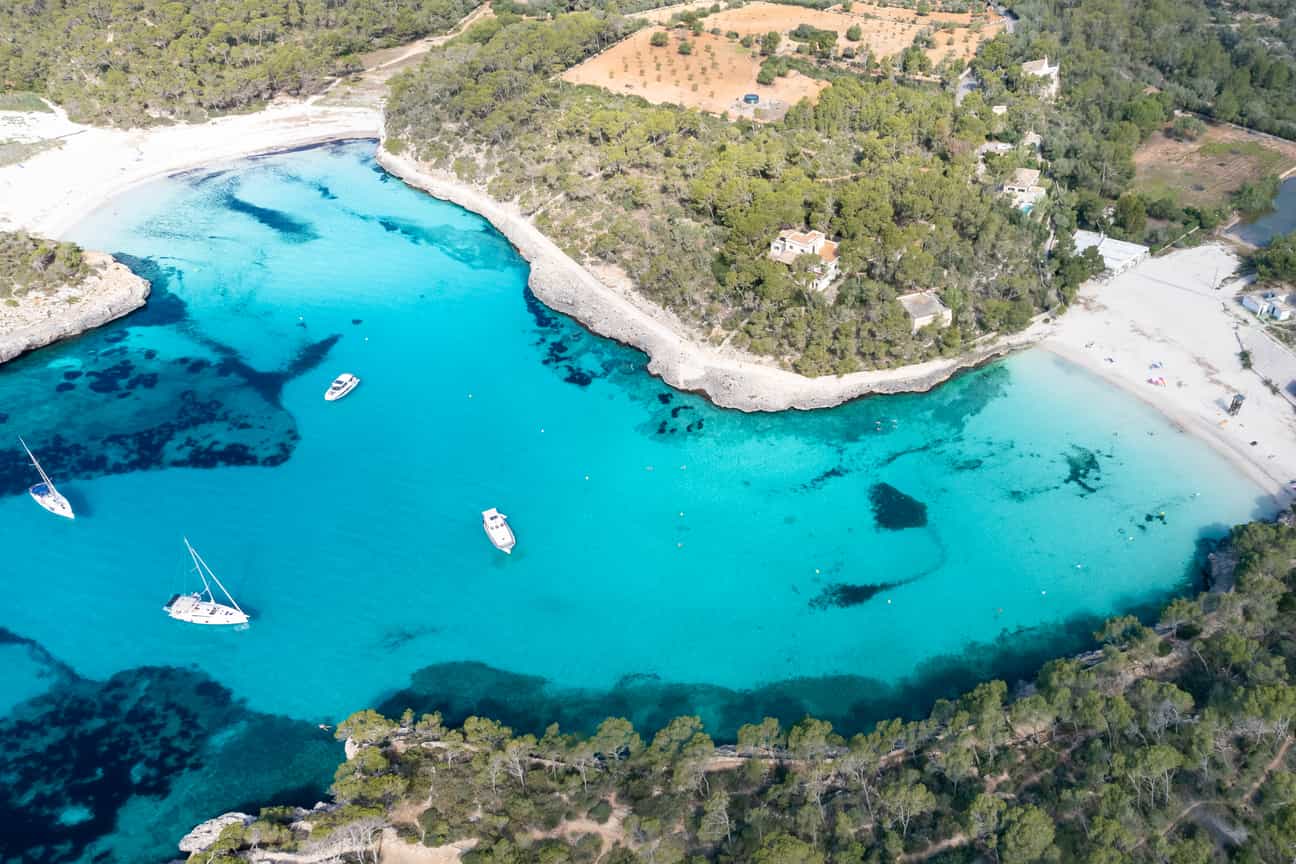
Seen from the air, Cala Mondragó is striking with its turquoise waters, light-coloured sandy beach and the lush vegetation of the nature reserve, whilst Cala Llombards on Mallorca enchants with its combination of crystal-clear waters, a sandy beach and natural surroundings.
Cala Mondragó and Cala Llombards
These two bays in the south-east are among the most beautiful combinations of nature and swimming.
Cala Mondragó is situated in a nature reserve and consists of two beaches connected by a short coastal path. The water is calm, clear and ideal for snorkelling.
Cala Llombards is smaller and enjoys a spectacular location, surrounded by rocks and renowned for the intense colour of its water. It gets very busy in summer, so it’s worth getting there early.
The region around Santanyí is one of the best areas for beach lovers and is one of Mallorca’s classic hidden gems.
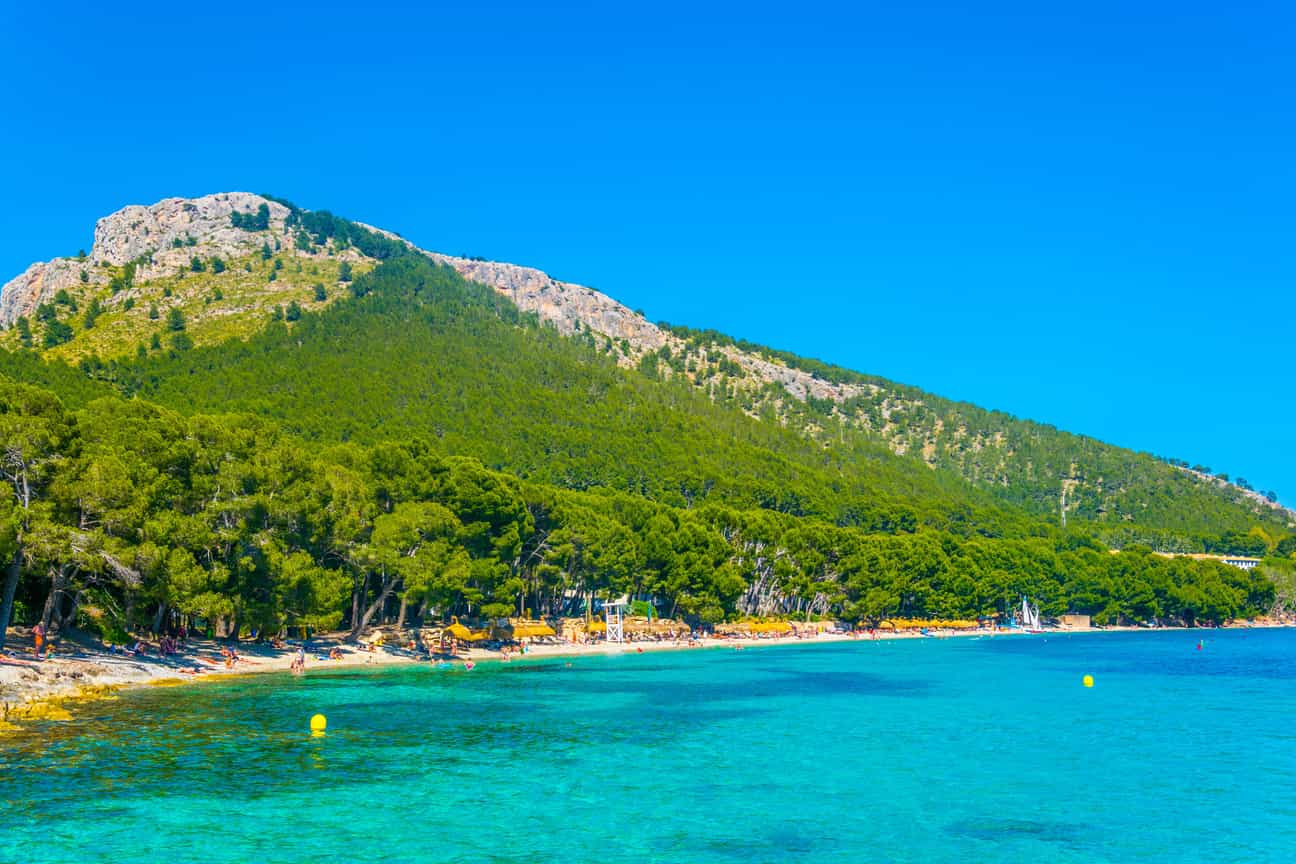
Formentor Beach is one of the best-known beaches in the north of Mallorca, with fine sand and calm waters, whilst Cala Deià, a small, rocky cove in the village of the same name, is a popular destination on the island’s west coast.
Cala Deià and Playa de Formentor
Two completely different, yet equally impressive places.
Cala Deià lies below the artists’ village of Deià and is a small, pebbly cove with a special atmosphere. It takes about 20 minutes to walk there.
Those exploring the west coast will find further insights in the post about a road trip along Mallorca’s west coast
Playa de Formentor, on the other hand, offers fine sand and calm waters, surrounded by pine trees and mountains. Its location on the peninsula makes the beach particularly impressive.
Cala Agulla

Cala Agulla is a spacious natural bay in the north-east of Mallorca, with a fine sandy beach and clear water.
Cala Agulla in the north-east is one of Mallorca’s most beautiful unspoilt beaches.
The wide sandy beach is framed by pine forests and hills and offers the perfect blend of nature and amenities.
A particular highlight is the connection to Cala Mesquida, which can be reached via a coastal walking trail. For anyone wishing to combine exercise and the beach, the guide to Hiking in Mallorca is also a great fit.
Cala Varques

The Cueva del Pont near Cala Varques is an impressive natural rock arch on the east coast of Mallorca.
Cala Varques is one of Mallorca’s best-known hidden coves and, at the same time, a real insider’s tip.
The beach is only accessible on foot, about a 20-minute walk from the car park. That’s exactly what makes it so special.
No facilities, no sun loungers – just nature, turquoise water and caves along the coast.
Its proximity to Porto Cristo makes it easy to combine a visit here with exploring the surrounding area. Find out more in the guide to Porto Cristo
You can find more hidden gems in the article on insider tips for Mallorca
Es Carbó and Cala Pi

A sailing boat lies peacefully in the sheltered bay of Cala Pi – one of the most idyllic bays in Mallorca.
These two beaches in the south are ideal for anyone willing to go the extra mile.
Es Carbó is only accessible on foot and is one of the quietest beaches on the island. Those who make the effort will be rewarded with plenty of space and crystal-clear water.
Cala Pi is a dramatic cove accessible via a long flight of steps. Its sheltered nature ensures calm waters.
Both are among the quieter beaches of Mallorca, away from the major tourist hotspots.
Three more beaches well worth a visit
Cala Mesquida
A wild beach with a landscape of dunes in the north-east. Waves form here, particularly when it’s windy, making it popular with water sports enthusiasts.
Cala Figuera (Formentor)
A small, rocky cove with exceptionally beautiful water. Ideal as a stop-off on the way to Cap de Formentor.
Cala Millor
A classic resort beach with a promenade, restaurants and amenities. Perfect for anyone who values comfort.
It is also worth visiting the area around Porto Cristo
When to visit and practical tips
The best time to visit Mallorca’s most beautiful beaches is in May, June and September. The water is warm then and the beaches are less crowded.
In July and August, it gets very hot and many beaches are already busy by mid-morning.
Hiring a car is recommended, as many of the best coves are spread out.
An important tip: Dark patches in the water are often Posidonia seagrass. It ensures clear water and is a sign of a healthy ecosystem.
A day at the beach can be perfectly combined with a visit to a market. You can find inspiration in our article on markets in Mallorca
If you’re travelling with a dog, you’ll find useful information in the guide to dog walks in Mallorca
For added comfort, we recommend staying in holiday homes with a pool in Mallorca

A view of Es Trenc with its salt flats and Colònia de Sant Jordi – one of the most famous landscapes in the south of Mallorca.
Frequently Asked Questions
Turquoise waters, warm sand and the scent of pine trees make Mallorca’s beaches one of the most beautiful destinations in the Mediterranean. Whether you’re looking for secluded coves or long sandy beaches, the island has something for everyone.
If you’d like to explore these places at your own pace, you’ll find suitable accommodation in our holiday homes in Mallorca
Where shall we go?
Can’t make up your mind yet? No problem! We’ve put together a comprehensive guide to the various holiday destinations in Mallorca for you.